Why the material name is only the starting point
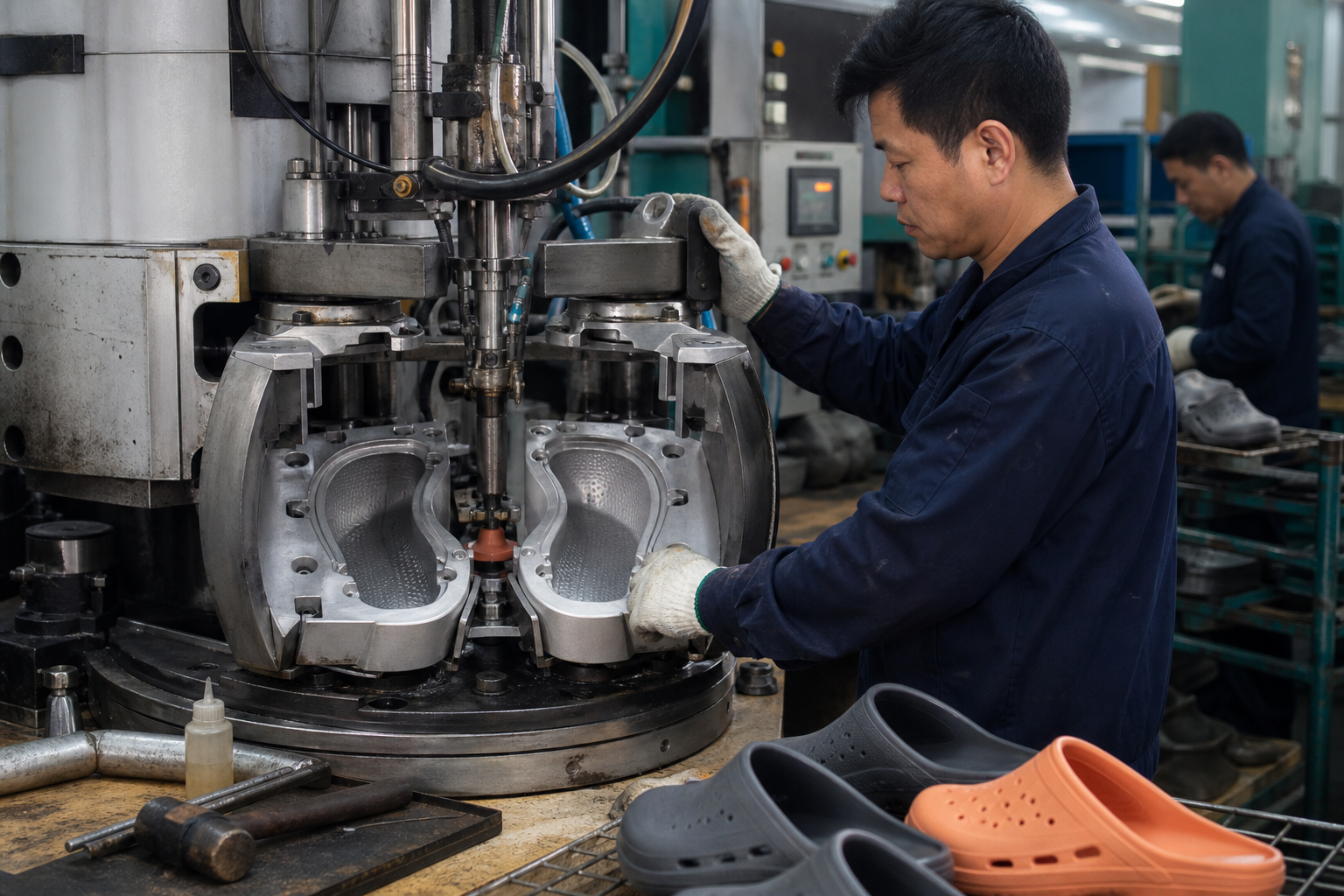
The material name on a quotation does not fully explain how a finished clog or slide will perform. Compound formula, density, foaming ratio, wall thickness, mold geometry and process settings all affect weight, rebound, shrinkage, odor and durability.
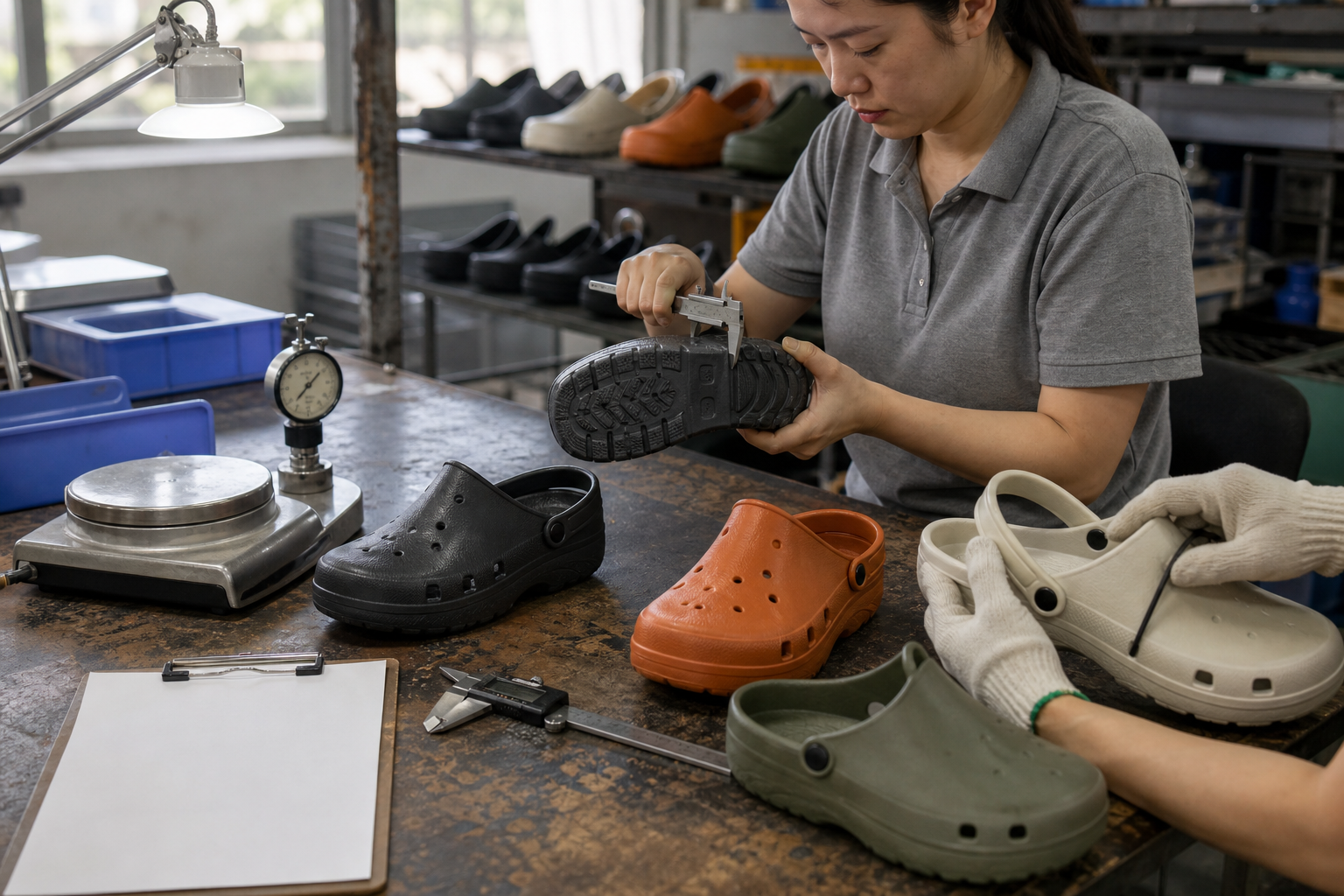
For a reliable wholesale order, approve a physical sample and a measurable specification. Two products described as EVA can feel and wear very differently, so the retained sample should remain the practical reference for bulk production.
EVA for one-piece molded footwear
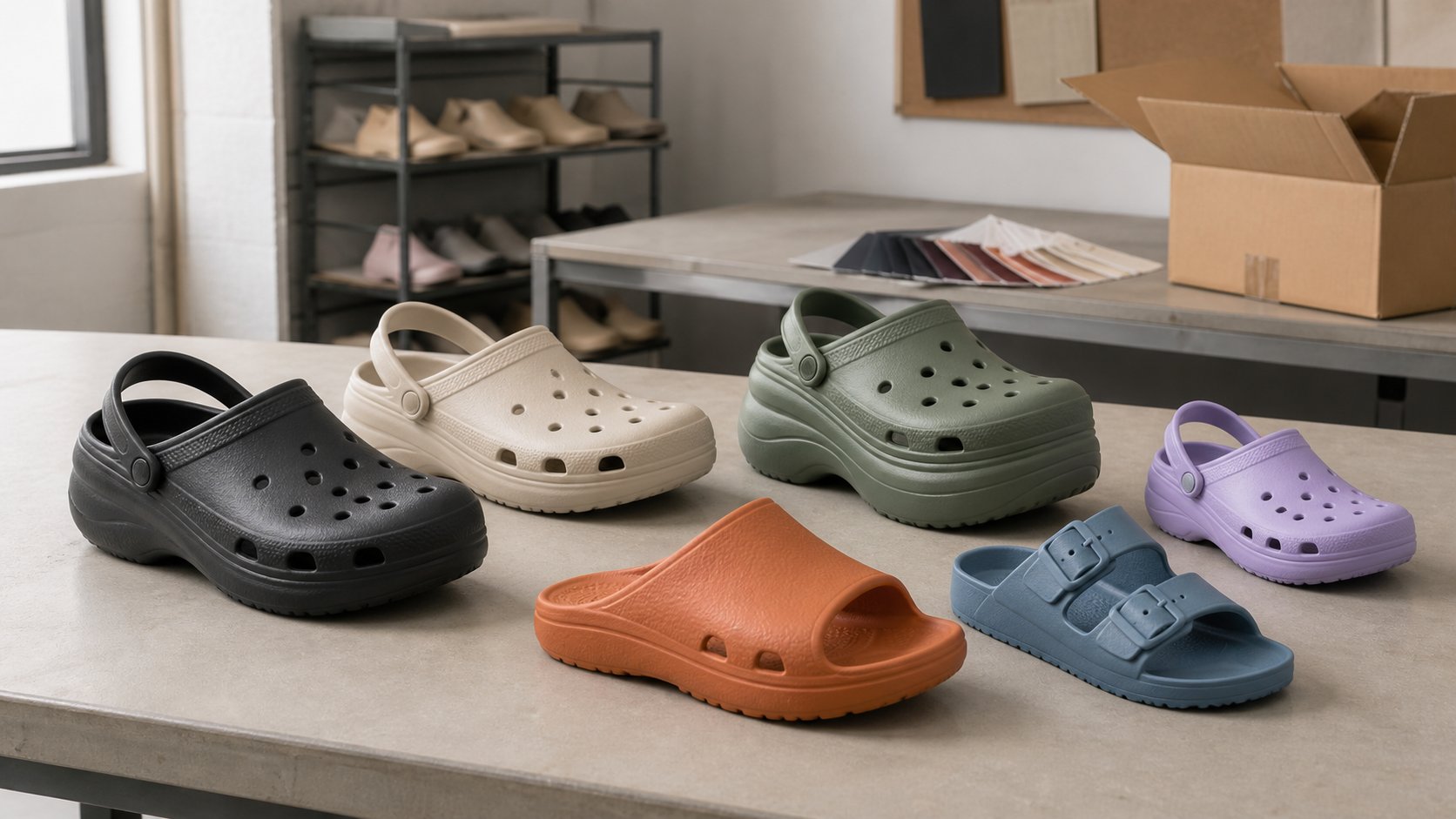
Ethylene-vinyl acetate is widely used for molded clogs, slides and midsoles because it can be lightweight, washable and cost-efficient. It also supports a wide range of colors and surface textures.
A very soft EVA sample may feel comfortable at first but deform too easily. A denser compound can improve structure while adding weight. Buyers should compare product weight, compression recovery, flex and dimensional stability rather than asking only for the softest formula.
- Target weight per pair and acceptable tolerance
- Hardness or density reference
- Shrinkage after cooling and storage
- Flex, compression recovery and odor
- Color consistency under agreed lighting
What suppliers mean by EPR-type foam
EPR is often used by footwear suppliers as a commercial description for resilient foam compounds with a softer, springier recovery feel. The exact formulation can vary between suppliers, which makes finished-product comparison more useful than the label alone.
Ask how the material behaves under compression, heat and repeated wear. If a supplier proposes EPR for a recovery slide, compare it with an EVA control sample using the same size and similar construction.
PVC, TPR and rubber in clog and slide construction
PVC can offer defined surface detail and a broad color range, but it is generally heavier than EVA. TPR and rubber are commonly considered when grip or abrasion resistance matters, including outsole inserts and two-material constructions.
Extra materials may require additional tooling, bonding or molding steps. The performance gain should be weighed against added weight, cost and production complexity.
| Material route | Typical strengths | Buyer checks |
|---|---|---|
| EVA | Lightweight, moldable, cost-efficient | Density, shrinkage, rebound, odor, color |
| EPR-type foam | Soft feel and resilient cushioning | Compression set, wear, formula consistency |
| PVC | Surface definition and color options | Weight, flexibility, destination-market compliance |
| TPR / rubber | Grip and abrasion resistance | Bonding, weight, outsole wear and cost |
A practical material approval brief
Give the supplier enough context to recommend a construction, then record the approved result. The brief should connect the material choice to the wearer, selling market, price point and expected use.
- Target wearer and use environment
- Approved sample weight and feel
- Color standard and tolerance
- Odor and chemical requirements
- Flex, compression, shrinkage and wear tests where relevant
BUYER FAQ
Frequently asked questions
Is EPR always softer than EVA?
Not necessarily. EPR is a supplier-side commercial description whose formulation can vary. Compare finished samples and measurable performance rather than relying on the name.
What is the best material for wholesale clogs?
There is no universal best material. EVA is common for lightweight molded clogs, while the final compound and construction should match the target price, wearer, climate and durability requirement.